Helen is a freelance science journalist based in Berlin, Germany. Specialising in healthcare, life sciences, bioanthropology, biotech and innovation. 

Highlighted Work

Sodium batteries’ durability and performance boosted by scandium additive

Adding manganese oxide, nickel and small amount of scandium can significantly improve both the durability and performance of sodium-ion batteries. The early stage finding shows that the batteries’ lifespan and charging performance can increase more than three times when scandium is used as a coating or structural additive.
Concerns about the cost and environmental impact of lithium mining has increased interest in finding alternative battery systems for use in electric vehicles and energy stora...

Tackling Rare Disease Through Genomics in Thailand and South Africa

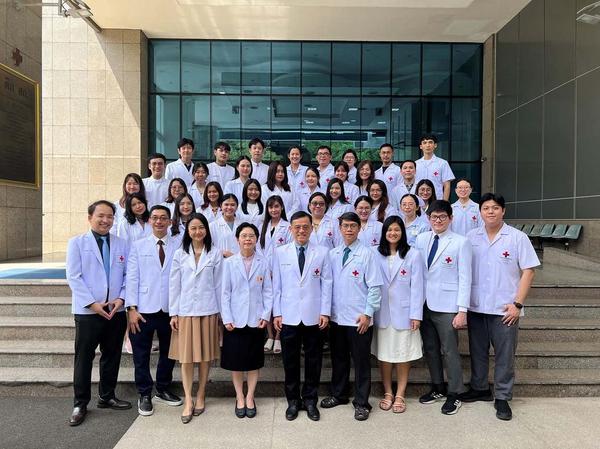
When most people think about places advancing rare disease diagnostics, sequencing, and treatments, big U.S. centers like Rady Children’s Institute for Genomic Medicine or Boston Children’s Hospital come to mind. But clinician scientists Vorasuk Shotelersuk, MD, and Shahida Moosa, MD, PhD, are showing what rare disease genomics can look like when it is driven from the clinic outward in both Thailand and South Africa, respectively.
Shotelersuk is a professor of pediatrics at the Faculty of Medici...

From Mila to Many: Making Ultra-Rare Disease Therapies More Accessible

When Mila Makovec was three years old, her parents started to notice that something was wrong. Previously an active and healthy toddler, Mila began to get stuck on words, have sight problems, and walk strangely. This was just the start of the symptoms of her ultra-rare genetic disease, a fatal neurological disorder called Batten disease (CLN7 type), which rapidly progressed over the next couple of years before she was diagnosed in 2016.
Mila became the first person in the world to receive a medi...

Cyclana Bio Is Exploring the Extracellular Matrix to Treat Endometriosis

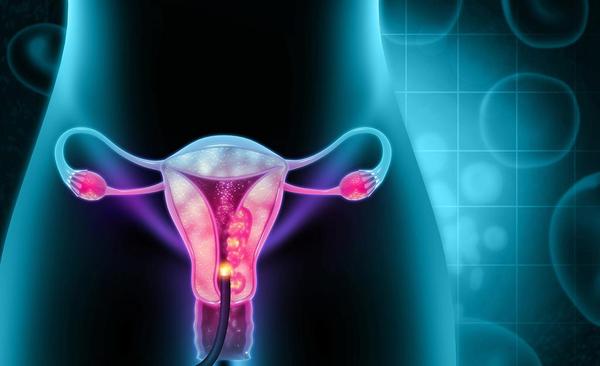
Despite an estimated 190 million women and girls around the world living with endometriosis, a chronic and painful gynecological condition, no disease-modifying therapy has yet been approved to treat it. Léa Wenger, PhD, and her colleagues at Cyclana Bio are aiming to fix this.
Endometriosis occurs when endometrial tissue grows outside the uterus, causing inflammation, pain, and sometimes scarring and fertility problems. Although this condition was historically neglected in terms of research and...

Stopping Neurodegeneration in Place with Vaccines

Developing truly disease-changing treatments for Alzheimer’s disease and other neurodegenerative conditions has proved challenging, with many failed trials over the last few decades. The approval of Eisai/Biogen’s monoclonal antibody lecanemab in 2023, the first such treatment to have a positive, albeit modest, impact on symptoms of Alzheimer’s disease, was therefore received with enthusiasm by many.
Critics of lecanemab and Eli Lilly’s donanemab, approved a year later for the same indication, a...

Moving In Vivo: Next Steps For CAR T-Cell Therapy

There is no doubt that autologous chimeric antigen receptor (CAR) T-cell therapy has revolutionized the treatment of serious blood cancers. A significant proportion of advanced-stage blood cancer patients who failed to respond to previous therapies now go into remission with this treatment, with some remaining cancer-free in the long term.
However, despite their success, these immunotherapies have significant disadvantages. Although CAR T-cell therapies have essentially rescued advanced-stage pa...

Riding the Gene Therapy Rollercoaster Into 2026

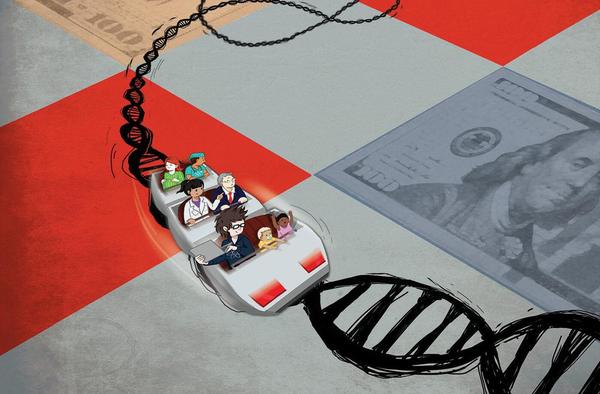
It has been a tough, if interesting, year for the gene therapy space, with many ups and downs culminating in some optimism and increased funding and investment as 2025 drew to a close.
A continued financial slump in biotech investment after an all-time high in 2021, combined with financial uncertainty triggered by tariffs and inflation concerns at the beginning of Trump’s second term in January, caused the XBI biotech index, a fund that usually indicates the state of the U.S. biotech industry, t...

Spotlight on Women’s Reproductive Health

Women’s health research has long been underfunded. Many reproductive health conditions that impact a significant number of women, such as endometriosis, polycystic ovary syndrome (PCOS), and uterine fibroids, have no treatments and understanding of these conditions is still limited.
While U.S. government funding remains low in this area at 10% or less of the National Institutes of Health (NIH) annual budget, there is increasing interest in the private sector. The number of startups in the region...

Europe and US face diminishing lithium supply for electric vehicle batteries

Lithium supplies in Europe and the US will not meet demand for electric vehicle batteries by 2030, despite significant predicted increases in production over this time, new research suggests.
China is predicted to continue its control of the market with greater access to imported lithium and better refining capacity than other regions, as well as a large domestic electric battery industry.
‘China is currently completely dominating,’ explains André Månberger, study co-author and senior lecturer...

Less than 10% of plastics are produced using recycled materials

An analysis of the global plastics industry shows that only 9.5% of plastic was made from recycled materials in 2022. Almost a third of plastic waste produced during that year was allocated for recycling, but only half was actually recycled. ‘The low recycling rate is due to a number of challenges including plastic diversity, contamination and economic barriers,’ explains lead author Quanyin Tan at Tsinghua University in Beijing.
The amount of plastic produced globally has increased from 2 mill...

Building a Precision Medicine Ecosystem in Africa

African populations are not well represented in genomic research, despite the enormous amount of genetic variation present in African populations. This gap makes it harder to develop fair and effective precision medicine programs that work for everyone.
Lack of funding and infrastructure in the region has made it hard to establish local programs in Africa in the past, but things are changing. Genomics and the early stages of precision medicine are now being set up in a number of countries on the...

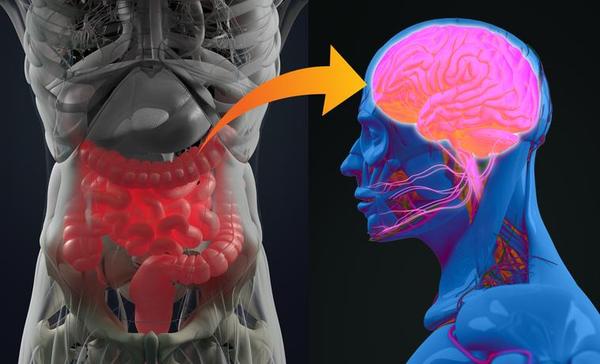
Uncovering the Mysteries of the Gut–Brain Connection

Links between the gut and the brain were discovered many years ago, but what role does the gut microbiome play in this relationship? Recent research suggests that disruption of or abnormal activity in the gut microbiome may increase our risk for neurological disease, but whether this knowledge can be harnessed to treat, diagnose, or monitor such conditions remains to be seen.
Research into the physiology of the gut–brain connection largely began in the 19th century. In the 1840s, William Beaumon...

Applying Precision Technology to Tackle Climate-Driven Infectious Diseases

The devastating impact that infectious diseases can have on the global population was well demonstrated by the COVID-19 pandemic. Fortunately, pandemics remain unusual occurrences, but research suggests that factors such as climate change may be increasing the risk of such events occurring in the future.
In a pre-pandemic study published in 2016, infectious disease researcher Jan Semenza, PhD, currently based at Umeå University in Sweden, and colleagues assessed potential drivers of infectious d...

Bioelectric bacteria-powered sensor detects water contaminants in real time

Synthetic biology has been combined with electrical engineering to create a small bioelectric sensor that can sense water contaminants in just minutes.

The sensor is currently at the prototype stage and is not yet being produced commercially, but has already been used to detect thiosulfate, known to cause algal blooms, within 2 minutes and also the endocrine disruptor 4-hydroxytamoxifen (4-HT) within 3 minutes.

Detection methods for these environmental pollutants, and others such as nitrates a

Genomic Pathogen Surveillance in the Spotlight

The COVID-19 pandemic has really highlighted the need for effective genomic pathogen surveillance and allowed researchers around the world to hone their skills and technology. While these advances are not in doubt, whether they are maintained and used to help prevent new pandemics and fight global threats such as antimicrobial resistance remains to be seen.

Over the last decade, huge advances in technology have made genomic sequencing cheaper and more accessible, facilitating the tracking of ba

Nature’s Painters: Making Sustainable Colors with Microbes

The production of textile dyes and food colorants can have a big environmental footprint. Biotech startups are rising to the challenge by engineering bacteria, fungi, and algae to sustainably produce natural colors.

Eight years ago, University of Cambridge researcher Jim Ajioka was in Nepal helping to produce a biosensor to detect arsenic in drinking water and was shocked at how poor the water quality was in the region.

“In Kathmandu, all of the textile industry just dumps its waste straight i

Investigation fails to replicate most cancer biology lab findings

The reliability of early-stage cancer biology research is called into question by an investigation that concludes more than half of experimental results can’t be replicated by independent scientists

Lab-based cancer research isn’t always easy to replicate, according to a new investigation

An eight-year-long investigation into the reliability of preclinical cancer biology research has found that fewer than half of the results published in 23 highly cited papers could be successfully reproduced.

Biomaterials Are Making the Building Industry More Sustainable

There is a growing awareness of the waste and pollution caused by the building industry. New biomaterials are being created using waste products and microbes to solve these ecological problems.

“Using biological materials in buildings isn’t a new concept – we’ve built wooden structures for thousands of years,” said Gavin McIntyre, co-founder and Director of Business Development at Ecovative Design, a US-based biotech making materials with mycelium — part of the root system of mushrooms.

Increa

Earphone cameras watch your facial expressions and read your lips

A wearable device consisting of two mini-cameras mounted on earphones can recognise your facial expressions and read your lips, even if your mouth is covered.

The tool – called C-Face – was developed by Cheng Zhang at Cornell University in Ithaca, New York, and his colleagues. It looks at the sides of the wearer’s head and uses machine learning to accurately visualise facial expressions by analysing small changes in cheek contour lines.

“With previous technology to reconstruct facial expressio

What will it take for Germany to embrace digital health?

Germans are not fast adopters of digital technology. With a fondness for using cash and low uptake of social media compared with most countries, they fiercely guard their right to control how personal information, including health records, is shared.1 When the independent foundation Bertelsmann Stiftung compiled an index measuring 17 countries’ progress in healthcare digitisation in 2019, Germany ranked second from the bottom (the UK came sixth).2

But 2020 is proving a time of change. Jörg Deba

Follow Me